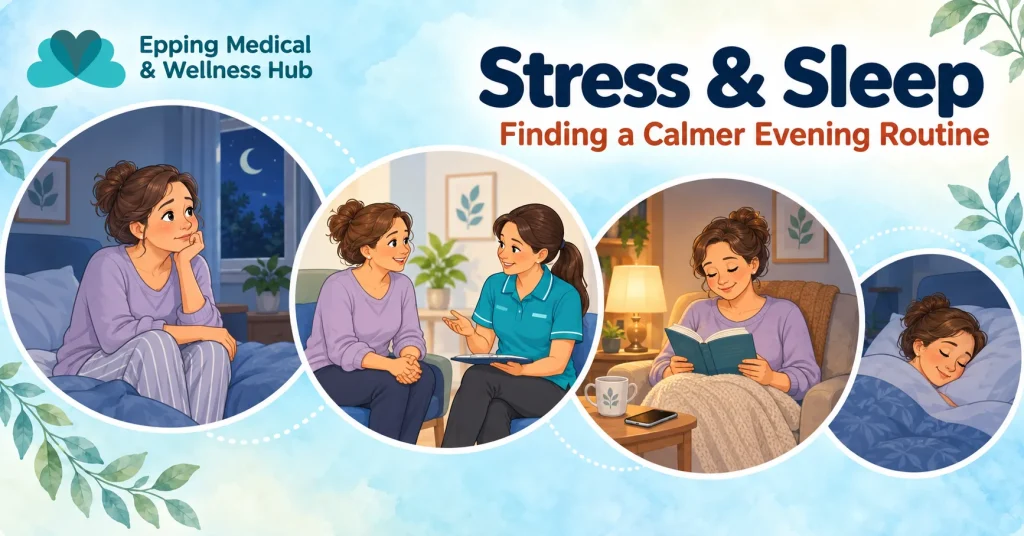
When the day finally becomes quiet, worries sometimes become louder. You may find yourself replaying a conversation, planning tomorrow or watching the clock. An unsettled night can then make the next day feel harder to manage.
Sleep difficulties are common, but the explanation is not always stress alone. Pain, medicines, other sleep disorders and health conditions can also contribute. Healthdirect’s insomnia guide explains why an individual assessment can be useful.
Make room for a gentler transition
A consistent sleep routine, a comfortable bedroom and less stimulation before bed can support sleep. Consider a short, quiet activity that suits you, such as reading a book or listening to calm audio. Try to deal with practical worries earlier in the evening rather than using bedtime to solve them. These approaches are included in Healthdirect’s advice on sleep habits.
Choose one manageable change first. For example, put tomorrow’s tasks on paper before your evening meal, or set aside a few minutes to prepare for the morning. The aim is to make the transition easier, not turn sleep into another performance target.
Find a calming activity you can return to
Relaxation can include gentle breathing, mindfulness or progressive muscle relaxation. Different approaches suit different people, and they may take practice. Healthdirect describes several relaxation techniques. If an activity makes you uncomfortable, stop and discuss another approach with your practitioner.
Know when to ask for help
Speak with your GP if sleep difficulties persist, leave you unrefreshed or affect your mood and daily activities. A brief sleep diary can help you explain the pattern. Treatment may involve addressing a contributing condition or a structured psychological approach such as cognitive behavioural therapy; a bedtime routine is not a complete treatment for every sleep problem. Read more about assessment and treatment options.
Prepare for the conversation
- Describe what happens on a typical night.
- Note changes in your work schedule, stress or health.
- Bring a list of medicines and any sleep products you use.
- Ask what the next step and follow-up plan should be.
You can read about our psychology service and counselling service, or contact Epping Medical & Wellness Hub to ask about availability and the right starting point for your concerns.